High-performance EMF shielding paint for indoor use
This graphene-free EMF shielding paint for interiors provides reliable protection against high-frequency electromagnetic radiation, including:
-
- Mobile networks (2G, 3G, 4G, 5G)
- Wi-Fi
- DECT cordless phones
- LTE
- Bluetooth
- Mobile antennas and wireless internet connections
The special formula based on graphite and carbon fibers ensures very high electrical conductivity and therefore highly effective EMF shielding (HF).
With proper grounding, low-frequency electric fields (LF) from household power sources can also be significantly reduced.
Graphene-free shielding paint – designed for safety and sustainability
Our Classic Series EMF shielding paint contains no graphene oxide (GO).
Instead, the required conductivity is achieved through carbon fibers, ensuring excellent shielding performance without the potential risks currently discussed in relation to some graphene compounds.
Shielding performance against high-frequency radiation (500 MHz – 40 GHz)
The shielding performance has been independently tested and verified.
Measurement range:
500 MHz – 40 GHz (including all current 5G frequencies)
Shielding performance at approx. 150 g/m² (approx. 5 m² / liter)
- 1 coat: 49 dB
- 2 coats: 65 dB
Shielding performance at approx. 100 g/m² (approx. 7–8 m² / liter)
- 1 coat: 36 dB
- 2 coats: 58 dB
- 3 coats: 65 dB
For living spaces, at least two coats are recommended.
Especially effective against 5G radiation
This EMF shielding paint has been designed for current and future mobile network frequencies:
- FR1: 600 MHz – 6 GHz
- FR2: 24 GHz – 40 GHz
This makes it particularly suitable for shielding modern 5G networks.
Advantages of shielding paint in powder form
Unlike ready-to-use liquid paints, the powder formulation offers several advantages:
-
- very long shelf life (several years)
- frost-resistant during shipping
- no preservatives required
- no risk of microbial contamination
- easy storage
After mixing with water, the paint should be used within approximately one week.
Free from problematic preservatives
Many liquid dispersion paints contain biocides, such as:
- Benzisothiazolinone (BIT)
- Methylisothiazolinone (MIT)
- other preservatives
These substances help prevent microbial degradation but are increasingly discussed due to possible environmental and health concerns.
Our powder-based EMF shielding paint contains no such preservatives.
Easy application
Application is simple:
- Mix powder with 2.75–3.0 liters of water
- Stir for about 10 minutes using a mixing tool
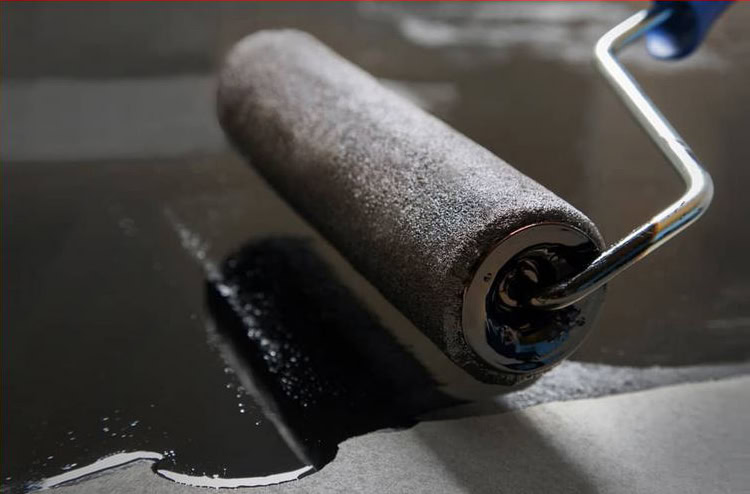
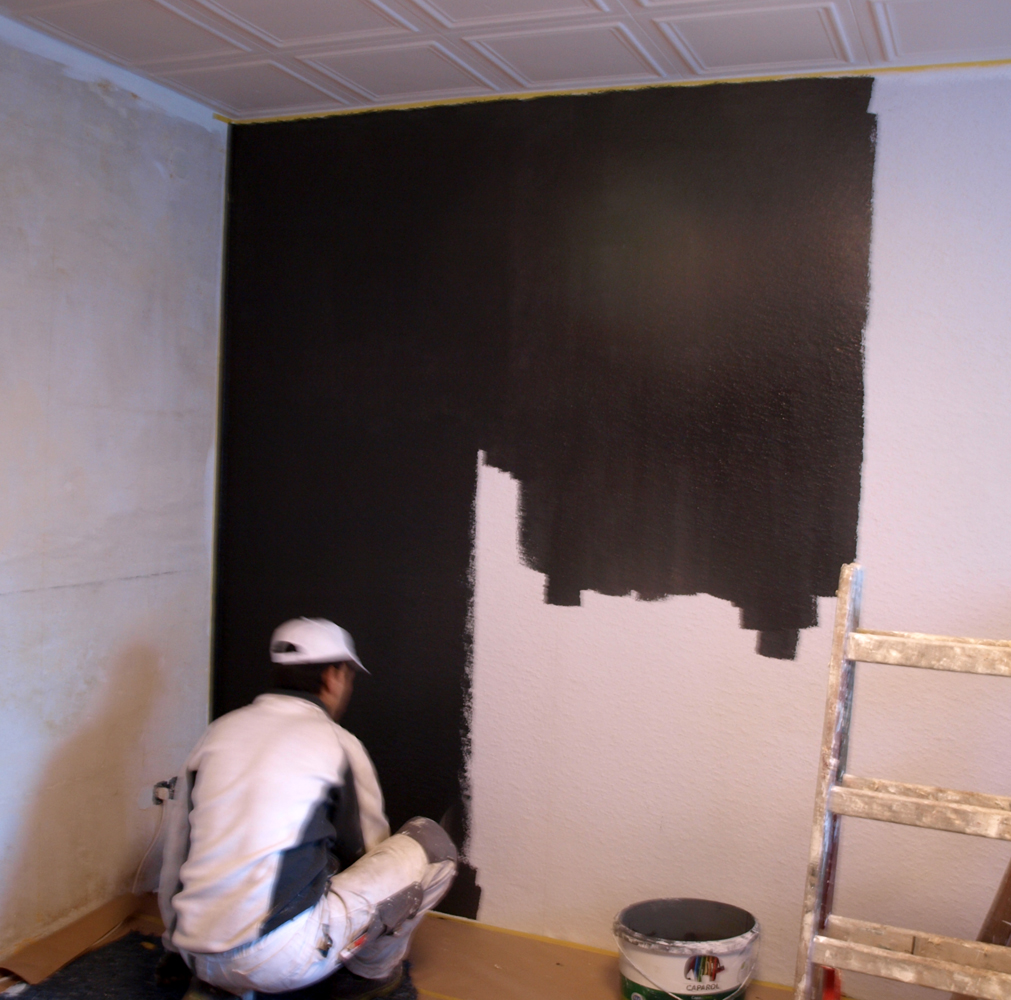
- Apply with a roller or brush
Coverage
- approx. 5 m² per liter at 150 g/m²
- approx. 7–8 m² per liter at 100 g/m²
The second coat can be applied after a short drying time.
Once fully dry, the surface can easily be painted over with standard interior wall paints.
Consumption Calculator
Excellent adhesion
The shielding paint adheres reliably to:
-
- drywall
- plaster
- concrete
- wood
- polystyrene
- old dispersion paints
- wallpaper
Adhesive tensile strength: 12.2 N/mm²
This prevents graphite dust from detaching from the surface.
As a result:
-
-
- no chalking surface
- no graphite residue on hands
- easy overpainting
-
Important: Grounding of the shielding surface
To dissipate low-frequency electric fields, proper grounding is required.
Recommended options:
- grounding kit
- indoor grounding plug
Grounding does not influence high-frequency shielding, but serves to dissipate electrical alternating fields and ensures electrical safety.
Technical specifications
Application: interior walls and ceilings
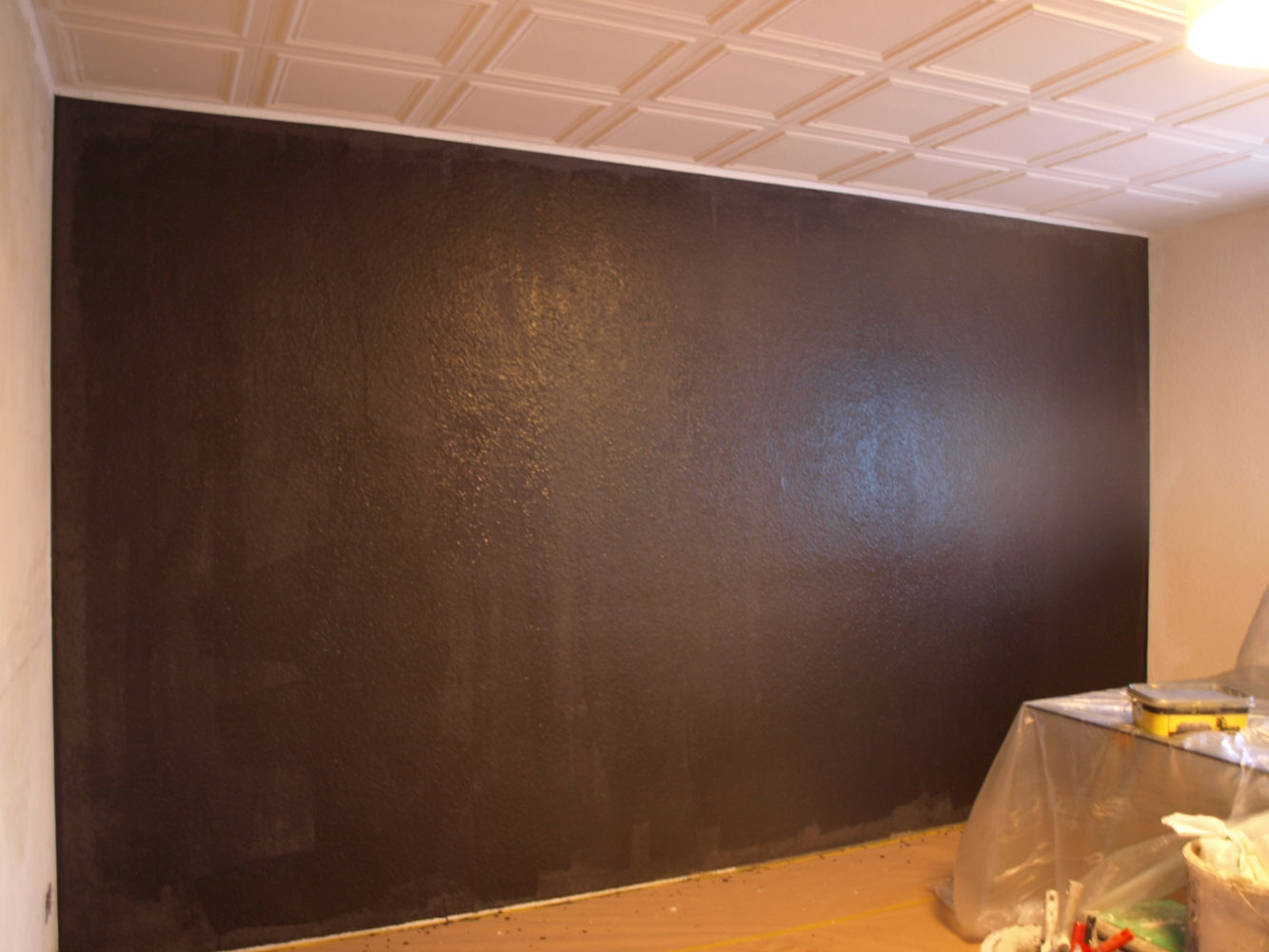
Color: anthracite black
Field types: HF (high-frequency electromagnetic fields), LF (low-frequency electric fields)
Ingredients: pure acrylic binder, carbon fibers, graphite
VOC content: 0.2 g/l (EU limit: 30 g/l)
Fire behavior: flame-retardant
Package contents
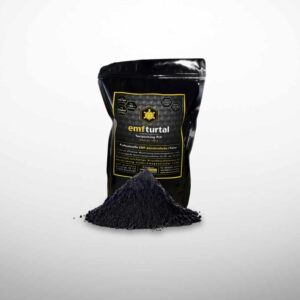
- 1 bag of powder (produces approx. 3 liters of shielding paint)
- Weight: 1.2 kg
Suitable paints for painting over
Suitable:
- Emulsion paints
- Many eco-friendly interior paints (after testing)
Not recommended:
- Pure clay paints
- Pure mineral silicate paints
An adhesion test should be carried out before using natural paints.
💡 Tip:
Für eine optimale Abschirmung sollte die Abschirmfarbe immer mit mindestens zwei Anstrichen aufgetragen und korrekt geerdet werden.
FAQ
What is shielding paint against electrosmog?
Shielding paint is a special conductive paint that significantly reduces electromagnetic radiation such as Wi-Fi, mobile phone signals or 5G.
It contains conductive pigments such as graphite or carbon fibres that reflect and attenuate electromagnetic waves.
What kind of radiation does shielding paint protect against?
Shielding paints reduce high-frequency radiation such as:
-
- Wi-Fi
- Mobile phone signals
- 4G / 5G
- DECT telephones
- Bluetooth
- LTE
With earthing, low-frequency electric fields from household electricity can also be reduced.
How well does shielding paint shield electromagnetic radiation?
The shielding performance is specified in decibels (dB).
Typical values for this shielding paint:
1 coat: up to 49 dB
2 coats: up to 65 dB
This corresponds to a reduction in radiation of over 99.9%.
Does shielding paint need to be earthed?
To shield low-frequency electric fields, the shielded surface must be properly earthed.
Earthing may only be carried out by a qualified electrician.
Please also observe the safety and processing instructions enclosed with the product.
Can shielding paint be painted over?
Yes. Once completely dry, shielding paint can be painted over with most standard emulsion interior paints without any problems.
Pure clay paints or mineral silicate paints are less suitable.
Why shielding paint in powder form?
Shielding paint in powder form has several advantages:
- No preservatives required
- Very long shelf life
- Frost-resistant during shipping
- Fresh mixture before processing
Many ready-to-use liquid paints contain biocides for preservation.
| Shielding effectiveness in dB | 1 layer with ink dry weight 100 g/m² | 2 layers with ink dry weight 208 g/m² | 3 layers with ink dry weight 316 g/m² |
|---|---|---|---|
| Frequency | |||
| C-Netz, TETRA, 450 MHz | 22 dB | 29 dB | 35 dB |
| D-Netz,GSM900, 900 MHz | 21 dB | 28 dB | 34 dB |
| 1 GHz | 21 dB | 28 dB | 34 dB |
| E-Netz, GSM1800, 1800 MHz | 20 dB | 27 dB | 33 dB |
| Blue-Tooth, WLAN 2400 MHz | 20 dB | 27 dB | 33 dB |
| 5G (Sub 6 GHz-Band) 3,4 - 3,8 GHz | 22 dB | 30 dB | 36 dB |
| WLAN neue Generation 5,8 GHz | 20 dB | 27 dB | 34 dB |
| 7,5 GHz | 20 dB | 28 dB | 36 dB |
| 10,0 GHz | 20 dB | 27 dB | 34 dB |
| 12,5 GHz | 21 dB | 29 dB | 34 dB |
| 15,0 GHz | 24 dB | 30 dB | 36 dB |
| 17,5 GHz | 28 dB | 32 dB | 38 dB |
| 20,0 GHz | 30 dB | 36 dB | 43 dB |
| 22,5 GHz | 28 dB | 38 dB | 45 dB |
| 25 GHz | 29 dB | 41 dB | 48 dB |
| 27,5 GHz | 34 dB | 47 dB | 54 dB |
| 30,0 GHz | 35 dB | 50 dB | 58 dB |
| 32,5 GHz | 37 dB | 50 dB | 55dB |
| 35,0 GHz | 38 dB | 54 dB | 62 dB |
| 37,5 GHz | 38 dB | 54 dB | 62 dB |
| 40,0 GHz | 36 dB | 58 dB | 65 dB |